Electrical Wiring Architecture & Circuit Safety in Sparks, Nevada
The internal branch circuit wiring of a home or commercial building in Sparks is hidden behind drywall, insulation, and conduit runs, yet it is responsible for safely transmitting power to every light, outlet, and heavy appliance. In Sparks's diverse housing stock—spanning historic residential districts, mid-century ranch homes, and modern master-planned communities—wiring methods reflect evolving building safety standards.
Older residences may still contain ungrounded two-wire branch circuits, deteriorating cloth-jacketed conductors, or improperly modified junction boxes. Concurrently, modern lifestyle demands require dedicated, continuous branch circuits for home offices, gourmet kitchens, luxury pool pumps, and detached workshop machinery. Qualified electrical rewiring ensures conductors match connected loads and modern grounding standards.
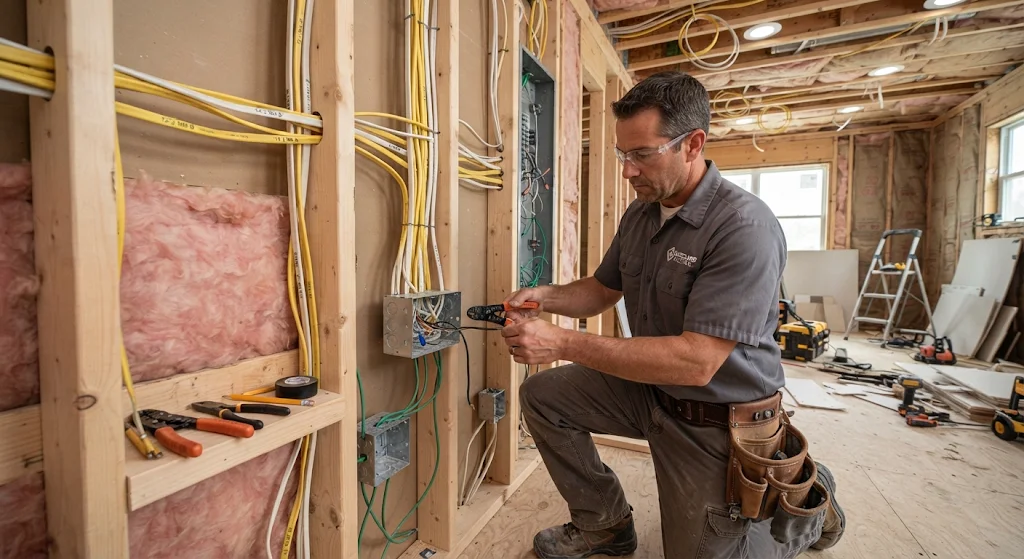
Proper conduit routing and conductor gauge selection prevent voltage drop and overheating in Sparks remodeling projects.
Dedicated Branch Circuits, Remodeling & Grounding Standards
Modern electrical codes enforced in Sparks require dedicated branch circuits for high-amperage equipment to prevent circuit overloads and nuisance tripping. When a microwave, refrigerator, bathroom heater, or air compressor shares a standard general lighting circuit, the combined draw often exceeds the 15-amp or 20-amp rating of the branch conductors.
Professional wiring services performed by independent electrical contractors encompass:
- Dedicated Appliance Circuits: Installing individual 120V and 240V lines with correct AWG sizing for induction cooktops, wall ovens, dishwashers, microwave drawers, and EV chargers.
- Remodeling & Room Additions: Running modern non-metallic sheathed cable (NM-B) or metal-clad (MC) conduit through framing, sizing junction boxes, and balancing phases.
- Ungrounded Circuit Modernization: Converting legacy two-prong outlet circuits to grounded three-prong systems using equipment grounding conductors or GFCI protection compliant with NEC 406.4(D).
- Exterior & Detached Outbuilding Wiring: Trenching underground feeder cable (UF-B) or rigid PVC conduit with proper burial depth to workshops, detached garages, and outdoor kitchen pergolas.
Conductor Sizing, Voltage Drop & Thermal Safety
In Nevada's climate, attic temperatures can easily exceed 140 degrees Fahrenheit during peak summer months. Under NEC Article 310, copper and aluminum conductors installed in high-temperature ambient environments require temperature derating adjustments to prevent wire insulation from breaking down prematurely under sustained load.
Experienced independent contractors calculate conductor ampacity with thermal correction factors, ensuring that long wire runs to distant bedrooms, detached shops, or exterior pool pumps avoid excessive voltage drop. Maintaining voltage drop below 3% on branch circuits ensures optimal performance of sensitive home computing hardware, refrigeration compressors, and variable-speed pool motors.
Looking for Qualified Electrical Wiring in Sparks?
Connect with participating independent licensed electrical contractors through the WATT911 Nevada referral desk. Contractors evaluate your site requirements, perform load calculations, and provide written estimates.
Safe Installation Practices & Referral Transparency in Sparks
Wiring repairs and new circuit installations involve high voltage and concealed hazards. Improper wire splices made outside approved junction boxes, undersized wire gauges, or loose wire nut connections represent leading causes of residential electrical fires. All branch circuit wiring should be installed by licensed professionals who adhere to local municipal codes.
WATT911 is an independent referral network connecting consumers with independent local electrical contractors. We do not perform electrical labor, employ electricians, or hold a Nevada contractor license. Independent contractors referred through our network conduct on-site evaluations, calculate conductor sizing, pull required building permits, and perform all physical wiring under their own NSCB C-2 license.
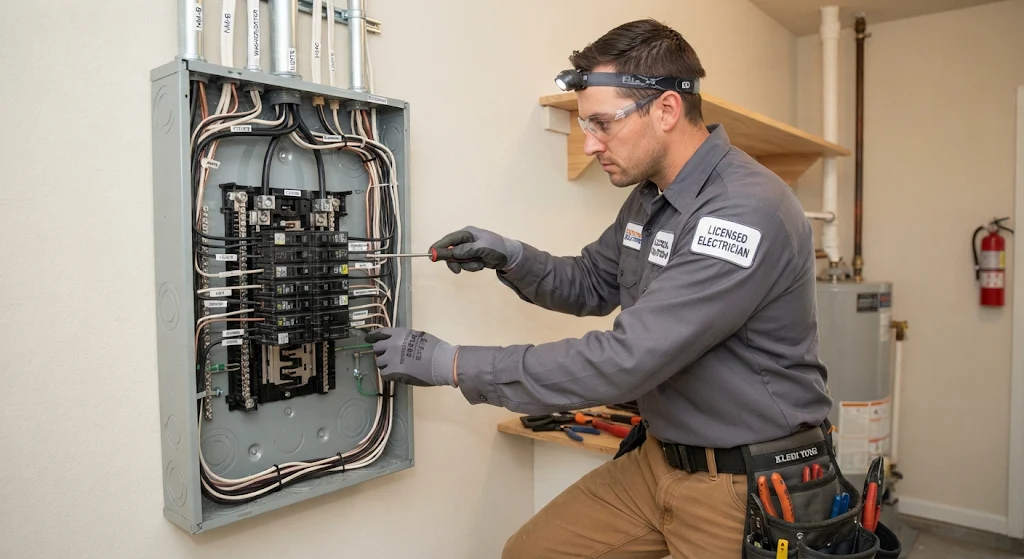
Secure side-wired screw connections and proper grounding prevent loose connections and overheating in Sparks homes.
Frequently Asked Questions
A dedicated circuit serves only one major appliance (such as an EV charger, refrigerator, or microwave) from its own dedicated breaker. This prevents multiple appliances from overloading the same circuit and causing frequent breaker trips.
Yes. An independent contractor can run a new ground wire back to the panel, rewire the circuit, or install GFCI receptacles labeled 'No Equipment Ground' in accordance with NEC standards to provide shock protection.
Not necessarily. Experienced electrical contractors use specialized fishing techniques through crawlspaces, attics, and conduit paths to minimize drywall disruption during whole-home rewiring projects.
Standard 15-amp lighting and receptacle circuits require minimum 14 AWG copper wire, while 20-amp small appliance and bathroom circuits require heavier 12 AWG copper wire.
Yes. Running new branch circuits, installing subpanels, or undertaking whole-home rewiring requires electrical permits and official city building inspections.